For the first time in Romania, Lia and Dan Perjovschi are bringing their works together in a major retrospective event: DRAFT for a Joint Retrospective. The project, organized by the Bucharest City Hall through ARCUB – the Bucharest Cultural Center, with the support of Raiffeisen Bank, marks the 40th anniversary of the intertwined careers of what is probably the most influential couple in Romanian and international contemporary art.
Conceived as a comprehensive journey that engages all the exhibition spaces of the Gabroveni Inn, the Retrospective, created in collaboration with Ivan Gallery, transforms the heritage building in the Old Town of the Capital into a veritable laboratory of memory and the present—a living space for encounters, ideas, and dialogue.
Born in Sibiu in 1961, Lia and Dan Perjovschi met in fifth grade at the Art High School—sitting at the same desk. Since then, their paths have developed independently, yet have remained constantly intertwined.
The year 2026 marks 40 years of artistic careers and over a thousand joint projects. Each has forged a distinct path, yet annually they have organized exhibitions, workshops, and conferences together. Their practices, rooted in critical thinking and social commentary, intersect and intertwine, building a profound vision of the contemporary world. The Perjovschi couple addresses themes such as: politics and power, democracy, post-communism, capitalism, nationalism, the global-local relationship, freedom and responsibility of expression, feminism, control, resistance, activism, protest, and vulnerability.
In short: Lia works with books, Dan with newspapers. Lia has moved from creating art with the body to analyzing the body in art and culture. Dan has migrated from the newspaper page directly to the walls and windows of museums around the world.
The exhibition Lia & Dan Perjovschi – DRAFT for a Joint Retrospective at ARCUB – Gabroveni Inn will be open throughout EEMC
EEMC’s opening event promises an evening of energy and authentic music with Balkan Taksim, one of Romania’s most original bands. With a unique mix of folk rhythms and electronic sounds, Balkan Taksim creates a colourful and vibrant musical kaleidoscope, continuing to surprise audiences following the success of their debut album “Disko Telegraf” (2021) with their second album “Acide balkanique” (2025). The band performed at Paléo Festival de Nyon, Paraiso Festival Madrid, BOZAR Brussels, Balkanik Festival, Electric Castle, Jazz in the Park & Astra Film Festival. They have been championed by Iggy Pop, Gilles Peterson, Nick Luscombe & Stuart Maconie, and they were nominated for the Music Moves Europe Awards (2022). For this special inaugural performance at EEMC, they will be joined by two prominent guests, friends of the band, each with their own impressive contribution to preserving and updating regional musical heritage.
Svetlana Spajić is a Serbian traditional singer based in Belgrade. Her main interest is traditional microtonal singing and its unique vocal techniques. The research in the subject led her to travel the Balkans for 30 years now, studying firsthand with the village singers of the oldest generation. Spajić sang with world’s famous traditional singers Hronis Aidonidis, Domna Samiou, Yanka Rupkina, Stella Chiweshe. Svetlana has collaborated and performed in institutions and venues throughout Europe and in the U.S. She leads the Retnik festival and platform in Serbia, which connects traditional performers of the oldest and youngest generations.
Zvonko Trailović is originally from the Romanian village of Osnícea, in the municipality of Bulioț, Zeiceri District, Black Timok Valley, Eastern Serbia. At the age of six, he joined the village folk ensemble, in which his parents were very active—his mother as a dancer and singer, and his father as a dancer. The musicians in this group during the 1980s still played flutes and bagpipes, instruments that have become very rare today. Zvonko traveled to many towns in Timoc as part of folk events, gaining a deeper understanding of the region from an ethno-folkloric perspective. He grew fond of the old songs passed down orally from generation to generation, developing into a highly refined vocalist in terms of dialectal interpretation, while also being a very skilled player of the local shepherd’s flute—an instrument rarely seen today.
For the first time in Romania, Lia and Dan Perjovschi are bringing their works together in a major retrospective event: DRAFT for a Joint Retrospective. The project, organized by the Bucharest City Hall through ARCUB – the Bucharest Cultural Center, with the support of Raiffeisen Bank, marks the 40th anniversary of the intertwined careers of what is probably the most influential couple in Romanian and international contemporary art.
Conceived as a comprehensive journey that engages all the exhibition spaces of the Gabroveni Inn, the Retrospective, created in collaboration with Ivan Gallery, transforms the heritage building in the Old Town of the Capital into a veritable laboratory of memory and the present—a living space for encounters, ideas, and dialogue.
Born in Sibiu in 1961, Lia and Dan Perjovschi met in fifth grade at the Art High School—sitting at the same desk. Since then, their paths have developed independently, yet have remained constantly intertwined.
The year 2026 marks 40 years of artistic careers and over a thousand joint projects. Each has forged a distinct path, yet annually they have organized exhibitions, workshops, and conferences together. Their practices, rooted in critical thinking and social commentary, intersect and intertwine, building a profound vision of the contemporary world. The Perjovschi couple addresses themes such as: politics and power, democracy, post-communism, capitalism, nationalism, the global-local relationship, freedom and responsibility of expression, feminism, control, resistance, activism, protest, and vulnerability.
In short: Lia works with books, Dan with newspapers. Lia has moved from creating art with the body to analyzing the body in art and culture. Dan has migrated from the newspaper page directly to the walls and windows of museums around the world.
The exhibition Lia & Dan Perjovschi – DRAFT for a Joint Retrospective at ARCUB – Gabroveni Inn will be open throughout EEMC



Before we debate touring logistics or ticketing algorithms, before we map ecosystems or measure carbon footprints – we need to answer a more fundamental question: What do we stand for?
EEMC exists at a specific moment in European history – a moment when the foundational values of the European project are being tested, challenged, and in some places actively undermined. Democratic backsliding, rising authoritarianism, restrictions on artistic freedom, attacks on media independence, threats to minority rights – these are not abstract political problems. They are the daily reality of the live music ecosystem.
A festival cannot operate freely where freedom of expression is conditional. A touring circuit cannot function where borders are instruments of exclusion. An independent venue cannot survive where the rule of law does not protect cultural space. A diverse music scene cannot thrive where equality and inclusion are treated as optional extras rather than fundamental principles.
THE FOUR FACES OF TAKING A STAND
The panel brings together four figures who each embody a different dimension of what it means for art and the cultural ecosystem to stand for values:
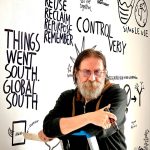
Dan Perjovschi – Art as Witness. The artist as citizen, armed with nothing but a marker and a conscience, drawing truth on walls for forty years – under dictatorship and in democracy, in MoMA and on protest banners. His drawings are ‘copyleft’ – free for any activist purpose. Art’s first duty is to see clearly and to say what it sees.
Michal Kaščák – Art as Principled Rebellion. The festival director who started in underground clubs under communism and built Pohoda on values – antitotalitarian concerts in 120 Slovak clubs, pro-LGBTQ+ events in 250 locations, solidarity journeys to Ukraine. Recipient of Slovakia’s highest civilian honour for defending democracy. Cultural leadership means accepting consequences for your convictions.
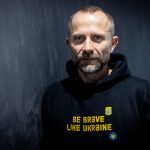
Vlad Yaremchuk – Art as Survival and Solidarity. Partnership Manager at UAME | Music Saves Ukraine, the initiative of the Ukrainian Association of Music Events focused on cultural diplomacy, supporting Ukrainian artists on European stages, and delivering humanitarian aid to civilians. Programming Director of Atlas Festival – Ukraine’s biggest music event, which returned in 2024 with a new focus on fundraising, raising over 4.8 million EUR in two years. When values are under the most extreme threat, art does not retreat. It transforms.
Fruzsina Szép – Art as Radical Inclusion. The co-founder of TAKE A STAND who builds festivals as spaces where everyone belongs – Superbloom doubled its wheelchair areas, 70% female audience, 45% women and queer artists in the lineup. She grew up walking through Munich’s Olympic Park with her blind father and turned that memory into a design principle. Values are not abstract principles but design decisions: who you build for determines what you stand for.
Art is not a luxury that follows after a society has secured its values. Art is the way a society discovers, defends, and renews those values. It is the first language of freedom – and the last to fall silent.
Opened by a keynote from Prof. Özgehan Şenyuva and moderated by Elena Calistru, the session closes with a collective commitment: a values statement that will serve as the ethical compass for the entire conference – and for the EEMC movement beyond it.
EEMC STANDS WITH UKRAINE
EEMC stands with Ukraine. We stand against the war. Against the invasion. Against the destruction of a sovereign nation, its people, its cities, its cultural infrastructure, and its right to exist.
This is not a political calculation. It is a values statement. If human dignity, freedom, democracy, equality, and the rule of law mean anything – then there is no position of neutrality available when a European neighbour is under military attack.
Vlad Yaremchuk’s presence on this panel is not symbolic. It is evidence – of what happens when values are tested under the most extreme conditions, and of what the music ecosystem can become when it chooses solidarity over self-preservation.
When the war ends – and it will end – and history asks what the European music industry did during the years that Ukraine fought for its survival – what will your answer be?
Values First. Then everything else.




From shared language to field execution – bridging the gap between how we plan for crowd safety and how it actually works on site.
Crowd management plans are written to satisfy licensing requirements. Incidents happen because of what those plans leave out: how people actually behave when the headliner is late, when the weather turns, when the bar queue blocks the emergency route, when nobody knows who has the authority to stop the show.
These two back-to-back seminars, powered by the YES Group (YOUROPE Event Safety Group), bring together some of the most experienced crowd safety professionals in the world – from Roskilde Festival, Pinkpop, Lowlands, North Sea Jazz, Paul McCartney’s world tours, and the London 2012 Olympics – to address the gap between paperwork and field reality.
The morning session establishes a shared operational language: the decision-making hierarchy in live event production, why risk assessments built on capacity rather than behaviour fail on site, and how crowds actually move – demonstrated through real video footage from real incidents.
The afternoon session confronts the persistent disconnect between plans and execution: how site design shapes crowd behaviour in ways CAD drawings never predict, how artist cancellations and schedule changes rewrite the audience map in minutes, and how communication failures between production, security, artist management, and authorities create the conditions in which incidents escalate.
These are not lectures. They are working sessions built around real cases, real footage, and real decisions – designed for festival and event production professionals, safety officers, site managers, security coordinators, and local authority representatives.
The goal is not better paperwork. It is better field execution – and the competence to make the right decision in the 90 seconds that determine whether everyone goes home safe.
DAY SCHEDULE
10:00-11:15 PART 1: Building a Shared Language
The live music ecosystem: who decides what, when, and why. Risk vs reality: why crowd management plans fail on site. Human behaviour in crowds: myths vs evidence.
11:15-11:30 Coffee break
11:30-13:00 PART 2: Building a Shared Language (continued)
Video case studies and group discussion.
13:00-14:00 Lunch
14:00-15:15 PART 3: The Gap Between Paperwork and Field Execution
From documents to decisions. Site design for crowd behaviour (not just capacity). Artist behaviour, schedule changes, and crowd psychology.
15:15-15:30 Coffee break
15:30-17:00 PART 4: The Gap Between Paperwork and Field Execution (continued)
Communication failures: production, security, artist, public. Practical principles for crowd-facing communication under stress.
In partnership with DSU
YES Group powered dialogue



The Live Music Ecosystem in Europe: Growth, Concentration and Diversity
The live music ecosystem in Europe is often described as a growing sector, supported by strong demand and increasing revenues, particularly in relation to large-scale events and arena-based touring. At the same time, these aggregated indicators mask significant structural changes within the ecosystem, including increasing market concentration and mounting financial pressure across venues, promoters, and festivals operating in different genres and at different scales.
This panel examines how current growth patterns affect cultural diversity across a large spectrum of live music, including popular, jazz, and classical repertoires. Particular attention is given to the evolving role of clubs, concert halls, and festivals that traditionally support emerging artists, new works, and cross-border circulation. The discussion explores how rising costs, changing business models, and risk concentration impact programming choices, artist development, and audience access.
By adopting an inclusive ecosystem perspective, the panel explores how policy frameworks, funding mechanisms, and industry practices can ensure the right balance of the entire ecosystem, bearing in mind the fundamental importance of the grassroots and small to medium-scale sector. Through their capillary territorial presence and their natural vocation for talent scouting, research, and experimentation, these organisations play a crucial role in feeding the wider music industry and sustaining its long-term creative renewal. As the most fragile yet foundational part of the ecosystem, they require targeted and systemic support to maintain diversity and structural balance across Europe.
Powered by Music Moves Europe Dialogue


In an increasingly complex and fragmented music ecosystem, data is everywhere – but clarity is not. From ticketing and streaming to audience insights and market intelligence, the real challenge is no longer access to data, but how to aggregate, interpret, and act on it efficiently.
This panel brings together leading voices from across data analytics, machine learning, and event infrastructure to explore how better data integration can optimise workflows, improve decision-making, and unlock new value across the live music sector.
What does meaningful data aggregation actually look like in practice? How can promoters, artists, and organisations cut through silos and build smarter, more connected systems? And how do we move from data overload to actionable intelligence that drives growth and sustainability?
Expect a focused, practical discussion on tools, platforms, and strategies that are already reshaping how the industry operates – and what’s next.
MusicTech Germany powered dialogue
From shared language to field execution – bridging the gap between how we plan for crowd safety and how it actually works on site.
Crowd management plans are written to satisfy licensing requirements. Incidents happen because of what those plans leave out: how people actually behave when the headliner is late, when the weather turns, when the bar queue blocks the emergency route, when nobody knows who has the authority to stop the show.
These two back-to-back seminars, powered by the YES Group (YOUROPE Event Safety Group), bring together some of the most experienced crowd safety professionals in the world – from Roskilde Festival, Pinkpop, Lowlands, North Sea Jazz, Paul McCartney’s world tours, and the London 2012 Olympics – to address the gap between paperwork and field reality.
The morning session establishes a shared operational language: the decision-making hierarchy in live event production, why risk assessments built on capacity rather than behaviour fail on site, and how crowds actually move – demonstrated through real video footage from real incidents.
The afternoon session confronts the persistent disconnect between plans and execution: how site design shapes crowd behaviour in ways CAD drawings never predict, how artist cancellations and schedule changes rewrite the audience map in minutes, and how communication failures between production, security, artist management, and authorities create the conditions in which incidents escalate.
These are not lectures. They are working sessions built around real cases, real footage, and real decisions – designed for festival and event production professionals, safety officers, site managers, security coordinators, and local authority representatives.
The goal is not better paperwork. It is better field execution – and the competence to make the right decision in the 90 seconds that determine whether everyone goes home safe.
DAY SCHEDULE
10:00-11:15 PART 1: Building a Shared Language
The live music ecosystem: who decides what, when, and why. Risk vs reality: why crowd management plans fail on site. Human behaviour in crowds: myths vs evidence.
11:15-11:30 Coffee break
11:30-13:00 PART 2: Building a Shared Language (continued)
Video case studies and group discussion.
13:00-14:00 Lunch
14:00-15:15 PART 3: The Gap Between Paperwork and Field Execution
From documents to decisions. Site design for crowd behaviour (not just capacity). Artist behaviour, schedule changes, and crowd psychology.
15:15-15:30 Coffee break
15:30-17:00 PART 4: The Gap Between Paperwork and Field Execution (continued)
Communication failures: production, security, artist, public. Practical principles for crowd-facing communication under stress.
In partnership with DSU
YES Group powered dialogue

“Seconds to Disaster” begins with a question that should keep every one of us awake: why are we still not teaching our children how to survive in a crowded space?
We teach them how to cross the street. We teach them to wear a seatbelt. But we send them into clubs, concerts, and festivals – spaces where thousands of bodies press together in the dark – without ever teaching them what to do when something goes wrong. How to move when a crowd compresses. How to breathe when smoke fills a room. How to find an exit they identified the moment they walked in. How to stay calm when every instinct says run.
This is not acceptable. Not after Colectiv. Not after Astroworld. Not after the Pulse Club. Not after Crans-Montana. These are not accidents. They are failures of culture – environments where safety was treated as paperwork, not as a value.
This session brings together survivors, international safety experts, emergency response authorities, and live music professionals to confront a truth the industry has avoided for too long: safety is not technical. It is cultural. And culture begins with education.
From clubs to arenas and festivals, the panel addresses shared responsibility across organisers, authorities, artists, and audiences – and launches a concrete initiative: the development of crowd safety education for European schools and professional training programmes. The goal is simple and non-negotiable: every young person who enters a crowded space should know how to protect themselves and the people around them.
We cannot bring back the lost ones. But we can make sure that the next generation walks into a venue knowing what the generation before them was never taught.
“Seconds to Disaster” is the moment where the live music ecosystem stops reflecting and starts building – a culture of prevention that begins in the classroom and extends to every stage, every venue, and every festival in Europe.
Because the right to enjoy live music must include the right to come home safe.
YES Group powered dialogue
https://yourope.org/project/yes-group/
In partnership with DSU
From shared language to field execution – bridging the gap between how we plan for crowd safety and how it actually works on site.
Crowd management plans are written to satisfy licensing requirements. Incidents happen because of what those plans leave out: how people actually behave when the headliner is late, when the weather turns, when the bar queue blocks the emergency route, when nobody knows who has the authority to stop the show.
These two back-to-back seminars, powered by the YES Group (YOUROPE Event Safety Group), bring together some of the most experienced crowd safety professionals in the world – from Roskilde Festival, Pinkpop, Lowlands, North Sea Jazz, Paul McCartney’s world tours, and the London 2012 Olympics – to address the gap between paperwork and field reality.
The morning session establishes a shared operational language: the decision-making hierarchy in live event production, why risk assessments built on capacity rather than behaviour fail on site, and how crowds actually move – demonstrated through real video footage from real incidents.
The afternoon session confronts the persistent disconnect between plans and execution: how site design shapes crowd behaviour in ways CAD drawings never predict, how artist cancellations and schedule changes rewrite the audience map in minutes, and how communication failures between production, security, artist management, and authorities create the conditions in which incidents escalate.
These are not lectures. They are working sessions built around real cases, real footage, and real decisions – designed for festival and event production professionals, safety officers, site managers, security coordinators, and local authority representatives.
The goal is not better paperwork. It is better field execution – and the competence to make the right decision in the 90 seconds that determine whether everyone goes home safe.
DAY SCHEDULE
10:00-11:15 PART 1: Building a Shared Language
The live music ecosystem: who decides what, when, and why. Risk vs reality: why crowd management plans fail on site. Human behaviour in crowds: myths vs evidence.
11:15-11:30 Coffee break
11:30-13:00 PART 2: Building a Shared Language (continued)
Video case studies and group discussion.
13:00-14:00 Lunch
14:00-15:15 PART 3: The Gap Between Paperwork and Field Execution
From documents to decisions. Site design for crowd behaviour (not just capacity). Artist behaviour, schedule changes, and crowd psychology.
15:15-15:30 Coffee break
15:30-17:00 PART 4: The Gap Between Paperwork and Field Execution (continued)
Communication failures: production, security, artist, public. Practical principles for crowd-facing communication under stress.
In partnership with DSU
YES Group powered dialogue


The Live Music Ecosystem in Europe: Growth, Concentration and Diversity
Music Moves Europe – Structured Dialogue with the Music Sector
Following the public panel on the Main Stage, a dedicated workshop session (invitation-based only) allows deeper, participatory exploration of the themes raised. The workshop is designed for delegates from representative associations and federations of the live sector, music cities, music universities, and related organisations to work through practical implications and sector responses.
From shared language to field execution – bridging the gap between how we plan for crowd safety and how it actually works on site.
Crowd management plans are written to satisfy licensing requirements. Incidents happen because of what those plans leave out: how people actually behave when the headliner is late, when the weather turns, when the bar queue blocks the emergency route, when nobody knows who has the authority to stop the show.
These two back-to-back seminars, powered by the YES Group (YOUROPE Event Safety Group), bring together some of the most experienced crowd safety professionals in the world – from Roskilde Festival, Pinkpop, Lowlands, North Sea Jazz, Paul McCartney’s world tours, and the London 2012 Olympics – to address the gap between paperwork and field reality.
The morning session establishes a shared operational language: the decision-making hierarchy in live event production, why risk assessments built on capacity rather than behaviour fail on site, and how crowds actually move – demonstrated through real video footage from real incidents.
The afternoon session confronts the persistent disconnect between plans and execution: how site design shapes crowd behaviour in ways CAD drawings never predict, how artist cancellations and schedule changes rewrite the audience map in minutes, and how communication failures between production, security, artist management, and authorities create the conditions in which incidents escalate.
These are not lectures. They are working sessions built around real cases, real footage, and real decisions – designed for festival and event production professionals, safety officers, site managers, security coordinators, and local authority representatives.
The goal is not better paperwork. It is better field execution – and the competence to make the right decision in the 90 seconds that determine whether everyone goes home safe.
DAY SCHEDULE
10:00-11:15 PART 1: Building a Shared Language
The live music ecosystem: who decides what, when, and why. Risk vs reality: why crowd management plans fail on site. Human behaviour in crowds: myths vs evidence.
11:15-11:30 Coffee break
11:30-13:00 PART 2: Building a Shared Language (continued)
Video case studies and group discussion.
13:00-14:00 Lunch
14:00-15:15 PART 3: The Gap Between Paperwork and Field Execution
From documents to decisions. Site design for crowd behaviour (not just capacity). Artist behaviour, schedule changes, and crowd psychology.
15:15-15:30 Coffee break
15:30-17:00 PART 4: The Gap Between Paperwork and Field Execution (continued)
Communication failures: production, security, artist, public. Practical principles for crowd-facing communication under stress.
In partnership with DSU
YES Group powered dialogue




When 100,000 young people gather at a festival, who is responsible for the world they step into – and the ideas they carry home?
Festivals are among the most powerful spaces of collective experience left in Europe. For millions of young people, a festival is not just entertainment – it is where values, identities, and worldviews are shaped in real time, at scale, in the company of peers. What festivals choose to amplify – and what they choose to tolerate – is not a question of artistic freedom alone. It is a question of cultural responsibility.
Two realities frame this conversation.
In Serbia, EXIT Festival – born in 2000 as a student movement against Slobodan Milošević – was cancelled in 2025 after its founders chose to stand with the student protests against the Vučić government and were stripped of over €1.5 million in public funding. Cultural freedom mattered more than business continuity. Over 25 years, EXIT became one of the most recognised festivals in Europe – Best Overseas Festival (UK Festival Awards, 2007), Best Major European Festival (European Festival Awards, 2013 and 2017), Take a Stand Award (European Festival Awards, 2025). Its ecosystem produced five international awards across three festivals built by the same team. EXIT’s story is not about what the music industry lost in Serbia. It is about what the music industry must defend everywhere.
Across the region, hip-hop and trap festivals have grown explosively, drawing hundreds of thousands of young attendees – many of them minors. Their stages amplify artists whose lyrics routinely normalise misogyny, drug use, and violence. Freedom of expression is a fundamental value. But the question remains: what is a festival’s responsibility when the content it curates shapes a generation’s understanding of what is acceptable?
These are not isolated tensions. They represent a fault line running through the entire European festival sector: the tension between commercial growth and cultural responsibility, between artistic freedom and the duty of care toward young audiences, between democratic values and the normalisation of harm.
What are festivals building in the minds of a generation? Where is the line between artistic expression and the curatorial amplification of harm? And what does it mean to take a stand – when taking a stand can cost you everything?
On May 21, 2026, the stage of the National Theatre Bucharest becomes one of the central highlights of the East European Music Conference 2026, a platform dedicated to the live music industry in Central and Eastern Europe. The event brings to the forefront not only the professional excellence of the sector, but also its artistic dimension, through a concert performed by Alternosfera, one of the most influential presences on the alternative scene in Romania and the Republic of Moldova.
Alternosfera is one of the most solid and influential presences in Romanian and Eastern European alternative rock—a band that, over more than two decades of activity, has built a coherent and recognizable artistic universe, deeply connected to the social and emotional realities of its audience. Founded in 1998, the band has continuously evolved both sonically and conceptually, while maintaining a strong core identity and an authentic relationship with its fans, who have grown alongside each stage of their discography.
From their early releases to the success of their debut album “Orașul 511” (2005), Alternosfera has demonstrated a rare ability to combine the energy of alternative rock with introspective lyricism, quickly becoming a constant presence on radio playlists and major concert stages. Albums such as “Visători cu plumb în ochi…” and the EP “Flori din groapa Marianelor” marked the transition toward a more mature artistic discourse, where existential themes, human fragility, and inner tensions take center stage.
A defining moment in the band’s journey is the conceptual triptych ePIsodia—comprising the albums “Virgula,” “Epizodia,” and “Haosoleum”—an ambitious project built around the symbolism of the mathematical constant π. This artistic endeavor strengthened Alternosfera’s position as one of the few bands in the region to coherently merge music with a broad philosophical concept, exploring the relationship between chaos and order, between fragment and whole, and between individual experience and the continuous flow of reality. The concerts associated with this project attracted thousands of spectators, confirming the band’s regional impact.
In recent years, Alternosfera has expanded its artistic expression through special projects such as THEATROLL, where their songs were reinterpreted alongside an orchestra in major cultural venues, as well as through the release of the album “Steaguri fără culori” (2025), a lucid reflection on propaganda, manipulation, and the fragility of truth in contemporary society. With each live appearance, the band succeeds in transforming the concert into an intense and participatory experience, reinforcing its status as a benchmark of the alternative scene and a relevant artistic voice in an ever-changing cultural landscape.
For the first time in Romania, Lia and Dan Perjovschi are bringing their works together in a major retrospective event: DRAFT for a Joint Retrospective. The project, organized by the Bucharest City Hall through ARCUB – the Bucharest Cultural Center, with the support of Raiffeisen Bank, marks the 40th anniversary of the intertwined careers of what is probably the most influential couple in Romanian and international contemporary art.
Conceived as a comprehensive journey that engages all the exhibition spaces of the Gabroveni Inn, the Retrospective, created in collaboration with Ivan Gallery, transforms the heritage building in the Old Town of the Capital into a veritable laboratory of memory and the present—a living space for encounters, ideas, and dialogue.
Born in Sibiu in 1961, Lia and Dan Perjovschi met in fifth grade at the Art High School—sitting at the same desk. Since then, their paths have developed independently, yet have remained constantly intertwined.
The year 2026 marks 40 years of artistic careers and over a thousand joint projects. Each has forged a distinct path, yet annually they have organized exhibitions, workshops, and conferences together. Their practices, rooted in critical thinking and social commentary, intersect and intertwine, building a profound vision of the contemporary world. The Perjovschi couple addresses themes such as: politics and power, democracy, post-communism, capitalism, nationalism, the global-local relationship, freedom and responsibility of expression, feminism, control, resistance, activism, protest, and vulnerability.
In short: Lia works with books, Dan with newspapers. Lia has moved from creating art with the body to analyzing the body in art and culture. Dan has migrated from the newspaper page directly to the walls and windows of museums around the world.
The exhibition Lia & Dan Perjovschi – DRAFT for a Joint Retrospective at ARCUB – Gabroveni Inn will be open throughout EEMC


The live sector across Eastern Europe is running out of margin. Energy costs are climbing. Production budgets are exploding. Taxation systems built decades ago are still being applied to an industry that has changed beyond recognition. In Romania, organisers warn that without urgent fiscal and regulatory reform, the live music sector may face cancellations and severe economic decline as early as summer 2026.
This panel does not deal in abstractions. It puts four concrete reform fights on the table – the same fights that will decide whether festivals, venues, and cultural entrepreneurs across Romania survive the next two years.
Who has authority over what – and what happens when nobody does?
Every major event operates under a command structure that connects organisers, police, fire services, emergency medical teams, and municipal authorities. On paper, these structures are clear: defined roles, communication protocols, escalation procedures, mutual aid agreements. On the ground, they break down – because priorities conflict, decisions are delayed, and the person who should make the call is waiting for permission from someone who isn’t in the room.
Part 1 – The Architecture
How joint operations are designed: the institutional landscape behind a live event. The relationship between event organisers and public authorities. Command posts, control rooms, and the communication channels that connect them. What each stakeholder expects from the others – and where those expectations diverge. The three categories of decisions that determine outcomes: contractual (agreed weeks in advance, hard to change), operational (should be flexible but often treated as fixed), and situational (must happen fast, often without consensus). The key problem: situational decisions – stop entry, delay the artist, open emergency routes – are the ones that save lives, and they are the ones most likely to be delayed because nobody pre-authorised them.
Part 2 – The Breakdown
What happens when structures meet pressure. Participants work through scenarios drawn from real events where command structures were tested: conflicting priorities between safety and commercial interests, communication failures between control rooms operating on different channels, delayed decisions because authority was unclear, and the moments where a pre-authorised protocol would have prevented an escalation but didn’t exist. Each scenario is examined for what was planned, what actually happened, and what should have been different. Participants leave with a framework for designing command structures that work under stress – not just on paper.
In partnership with DSU
YES Group powered dialogue



The path from a local club to the international mainstage is rarely a straight line, but music conferences and showcase festivals have become essential accelerators in this journey. This panel brings together promoters, bookers, and managers to examine how a strategic showcase appearance translates into international touring opportunities.
The discussion covers what festival buyers actually look for when scouting talent in a B2B environment, why professional readiness is as vital as the live set itself, and how artists and their teams can turn visibility into viability on the world stage.
- The Power of the Slot: How to turn a showcase into a catalyst for international booking and agent representation
- The Promoter’s Lens: What festival buyers are actually looking for when scouting talent
- Strategic Export: Navigating the transition from one-off international dates to sustainable global touring circuits
- Preparation vs. Performance: Why professional readiness – EPKs, team structure, networking – is as vital as the live set itself
By analysing current market trends and success stories, this session provides a blueprint for artists and industry professionals looking to turn visibility into viability on the world stage.
FOMC powered dialogue
Workshop for emerging CEE bands




Every career that ever mattered started in a small room.
Control Club. Expirat. Quantic. The rooms where bands played their first real gig, where a scene was born on a Tuesday night in front of forty people. Rooms like these exist in every city with a living music culture. But across Europe, they are disappearing – not because audiences stopped coming, but because rents went up, noise complaints won, and nobody built the policy architecture to protect them.
This panel covers the full chain – from the 200-cap club where careers begin to the 5,000-seat arena where they headline – and asks how cities build, protect, and connect their live music infrastructure.
But infrastructure alone is not enough. Running a venue is one of the most complex jobs in the live events industry – and until 2026, there was no postgraduate programme in Europe designed for it. In February 2026, the European Arenas Association and Ulster University launched the first MSc in Venue Business, alongside 18 micro-credential courses covering every specialist area of venue management. If the arena sector is professionalising its workforce through dedicated education, what about clubs, mid-size venues, and cultural centres across Eastern Europe?
Drawing on academic research on why venues are urban infrastructure, the Mannheim Model on how one city built an integrated system connecting education, industry incubation, and a UNESCO City of Music designation, the Timișoara European Capital of Culture experience on what survives after the programme ends, and the latest European data on who actually owns Europe’s stages – this panel makes the case that deliberate ecosystem building requires three things together: policy architecture, infrastructure investment, and professional education.
A city with arenas but without grassroots venues has cut the roots of its own future. An industry with venues but without educated professionals is outsourcing its future to chance. The question is not whether to invest – it is how to connect the full chain and train the people who run it.
Whether you run a 200-cap club or a 5,000-seat arena, whether you sign the urban plan or open the doors every night – this conversation is about you. And about making sure the rooms that make your city worth living in exist not by luck, but by design.
Who has authority over what – and what happens when nobody does?
Every major event operates under a command structure that connects organisers, police, fire services, emergency medical teams, and municipal authorities. On paper, these structures are clear: defined roles, communication protocols, escalation procedures, mutual aid agreements. On the ground, they break down – because priorities conflict, decisions are delayed, and the person who should make the call is waiting for permission from someone who isn’t in the room.
Part 1 – The Architecture
How joint operations are designed: the institutional landscape behind a live event. The relationship between event organisers and public authorities. Command posts, control rooms, and the communication channels that connect them. What each stakeholder expects from the others – and where those expectations diverge. The three categories of decisions that determine outcomes: contractual (agreed weeks in advance, hard to change), operational (should be flexible but often treated as fixed), and situational (must happen fast, often without consensus). The key problem: situational decisions – stop entry, delay the artist, open emergency routes – are the ones that save lives, and they are the ones most likely to be delayed because nobody pre-authorised them.
Part 2 – The Breakdown
What happens when structures meet pressure. Participants work through scenarios drawn from real events where command structures were tested: conflicting priorities between safety and commercial interests, communication failures between control rooms operating on different channels, delayed decisions because authority was unclear, and the moments where a pre-authorised protocol would have prevented an escalation but didn’t exist. Each scenario is examined for what was planned, what actually happened, and what should have been different. Participants leave with a framework for designing command structures that work under stress – not just on paper.
In partnership with DSU
YES Group powered dialogue






This is not a panel about women in music. It is a panel about building a healthier, more equitable live music ecosystem – led by the women who are already doing it.
Women are shaping the international music ecosystem across every part of the value chain – management, booking, production, festival direction, communications, policy, and community building. Yet structural barriers persist: limited export infrastructure, market concentration, insufficient cross-border connectivity, and a persistent gender imbalance in leadership that keeps talent and ambition from reaching their full potential.
This panel brings together festival directors, platform executives, booking professionals, and community builders from across Europe and the Middle East to share practical insights on how music and careers travel beyond national borders – from international touring circuits and festival booking to label partnerships, distribution strategies, and market entry.
Particular attention is given to Central and Eastern Europe, where significant artistic talent and professional ambition exist but the infrastructure to support international growth is often missing. The panel asks: could dedicated export offices, coordinated industry platforms, and targeted support systems accelerate global visibility for artists and creative entrepreneurs from the region? And how should girls and young women be empowered to thrive in this industry – not just survive it?
The conversation addresses gender equality not as an abstract principle but as a structural driver of innovation and resilience – examining inclusive leadership, access to decision-making roles, and the concrete support systems that exist or need to be built for women at every stage of their career.
Breaking the export gap. Building cross-border collaboration. Providing the map, the contacts, and the courage to follow.
What actually happened – and what should have happened instead?
Real cases from European festivals and events – not as cautionary tales, but as operational learning. Participants work through actual scenarios using event documentation, operational data, site plans, and timeline reconstructions to understand the chain of decisions that led to an outcome – and where different decisions would have changed it.
Part 1 – Reconstruction
Cases selected from across the European landscape: crowd density incidents, weather emergencies, artist-related disruptions, communication failures, and situations where the gap between the plan and the field became critical. Participants are presented with real event data – stripped of identifying details where necessary – and work through the timeline of decisions that shaped the outcome. Site plans, crowd density readings, communication logs, and risk assessment documents are used to reconstruct what happened, when, and why. The focus is on identifying the decision points where a different choice would have changed the result – and understanding why the wrong choice was made.
Part 2 – Application
Building on the case analysis, participants develop operational frameworks they can take home: how to design pre-authorised decision protocols that remove hesitation in critical moments, how to build communication trees that actually function under pressure, how to conduct post-event operational reviews that produce learning instead of blame, and how to translate lessons from other events into prevention measures for their own. Each participant identifies at least one concrete operational change they will implement at their next event.
In partnership with DSU
YES Group powered dialogue




In 2022, Twenty One Pilots played Electric Castle in Romania. On stage, a portal opened into the Upside Down. Stranger Things had arrived at a festival – not as a billboard on a fence, but as a creative element woven into the live performance itself. The moment was filmed. It went on YouTube. It has been watched over 50 million times.
That is what happens when a brand activation stops being a sponsorship and becomes a show moment. When the integration is designed into the performance, not bolted onto the festival perimeter. When the content captured from the live event outlives the event itself by years.
This panel is about how that works – creatively, technically, and commercially. Live music has evolved beyond the stage into immersive experiences where performance, brand storytelling, and audiovisual content intersect. Festivals and concerts are increasingly shaped by collaborations between artists, production teams, brands, and music supervisors who create audience moments that don’t end when the lights go down.
In 75 minutes, you’ll hear from the people who design these moments: music supervisors who choose the sound, show directors who build the visual experience, festival production managers who make the logistics work, creative directors who connect the brand to the artist, and the artists who decide whether to say yes.
If you programme festivals, manage artists, run production, work in advertising, or supervise music for screen – this is where your worlds collide.
Sync About It powered dialogue



The Closing Conversation of EEMC 2026
EEMC opens by asking what we stand for. It closes by asking what we are building into the machines.
Artificial intelligence is no longer a future conversation for the music industry. It is a present reality. AI is composing music, generating voices, creating virtual artists, shaping what listeners discover, and making decisions that were previously made by humans – from playlist curation to A&R to production to distribution. The tools are extraordinary. The questions they raise are urgent. And the music industry is making decisions about them right now, whether it has a framework for those decisions or not.
This closing panel confronts the intersection of technology, artificial intelligence, and the live music ecosystem – not as a technology showcase, but as a values conversation. What happens to authorship when a machine generates the song? What happens to cultural identity when AI can replicate any musical tradition without connection to the community that created it? What happens to the economic model of live music when virtual artists can stream millions without ever needing a stage, a venue, or a fee? And what happens to the artists, the crew, the venues, and the festivals – when the ecosystem they built their careers in is being reshaped by code?
The panel brings together voices from AI ethics and governance, music technology innovation, the commercial music industry, and the live events technology sector to examine how AI is transforming every layer of the ecosystem – and who gets to decide the values that govern that transformation.
Every session at EEMC 2026 has been about building, protecting, and professionalizing the live music ecosystem. All of it assumes that the ecosystem’s fundamental structure – human artists creating music, performing in physical spaces, for live audiences – will continue to exist. This panel asks: on what terms?
The conference opens with the values we hold as humans. It closes with the values we embed in machines. The last question of EEMC 2026 is the one that will define the next decade: when technology can do anything, who decides what it should do?
MusicTech powered dialogue
The Closing Conversation of EEMC 2026
What actually happened – and what should have happened instead?
Real cases from European festivals and events – not as cautionary tales, but as operational learning. Participants work through actual scenarios using event documentation, operational data, site plans, and timeline reconstructions to understand the chain of decisions that led to an outcome – and where different decisions would have changed it.
Part 1 – Reconstruction
Cases selected from across the European landscape: crowd density incidents, weather emergencies, artist-related disruptions, communication failures, and situations where the gap between the plan and the field became critical. Participants are presented with real event data – stripped of identifying details where necessary – and work through the timeline of decisions that shaped the outcome. Site plans, crowd density readings, communication logs, and risk assessment documents are used to reconstruct what happened, when, and why. The focus is on identifying the decision points where a different choice would have changed the result – and understanding why the wrong choice was made.
Part 2 – Application
Building on the case analysis, participants develop operational frameworks they can take home: how to design pre-authorised decision protocols that remove hesitation in critical moments, how to build communication trees that actually function under pressure, how to conduct post-event operational reviews that produce learning instead of blame, and how to translate lessons from other events into prevention measures for their own. Each participant identifies at least one concrete operational change they will implement at their next event.
In partnership with DSU
YES Group powered dialogue
For one evening, Quantic Club becomes the meeting point for live music and photography enthusiasts, hosting a large-scale Concert Photography Exhibition.
The opening will take place on May 22, 2026, at 19:30, inside Quantic Club in Bucharest — an iconic venue for the capital’s music scene.
The evening atmosphere will be complemented by live performances from King Solomon, 7th Boulevard, and Vicii, who will take the stage for a dynamic show.
Free entry.
About the Exhibition
The event brings together 21 photographers from Romania, showcasing over 50 works captured at concerts and festivals across the country.
Visitors will discover striking images taken in the heart of the action — frames that convey the energy of the stage, the emotion of the artists, and the vibration of the audience.
The exhibition highlights the diversity of the Romanian music scene, from underground clubs to major festivals, through the authentic perspective of the photographers you usually see in front of the stage.
In this way, unique moments experienced in front of the stage or within the crowd are presented in their final form — as physical prints — representing the final product of their work.
The event is addressed both to music lovers and photography enthusiasts, offering an opportunity to celebrate visual creativity and the spirit of live concerts, in one of Bucharest’s most beloved venues.
Participating Photographers (alphabetical order)
Adrian Coleașă
Anca Coleașă
Anca Ilinițchi
Andrei Ionuț
Bogdan Ioan Tătaru
Carlos Funes
Cătălin Ilinițchi
Cezar Cazan
Ciprian Vlăduț
Florin Diaconescu
Iancu Ionuț
Miluță Dulea-Flueraș
Ovidiu Panait
Paul Voicu
Petrescu Lucian
Petruș Tătaru
Ștefan Abageru
Theodor Tudose
Valentin Diaconescu
Victor Vătăvu
Vlad Bușcă
Poster graphic concept by Cezar Cazan.
Even Schedule
- Doors open: 19:00
- Exhibition opening: 19:30 – 20:30
- Concerts: 20:30 – …
About the Bands
Vicii – Ploiești
Vicii is a band from Ploiești, formed in 2024 after the breakup of R.O.M.B.
Despite their relatively short history, they quickly proved their place on festival stages such as LaRock Festival (Florești, Prahova), Republik Fest Ploiești, and Republica de Sub Castani.
They have also performed in multiple cities across Romania, including Bucharest, Tulcea, Galați, Târgoviște, Bacău, Iași, and, of course, Ploiești.
Vicii is more than an alternative rock band — it is a musical statement, a way of living and feeling freedom. Every song, lyric, and chord tells a story, and the audience becomes part of it.
7th Boulevard – Bucharest
Alternative rock band 7th Boulevard was formed in Bucharest in 2019.
Since releasing their debut album Metropolinsanity Vol. I (2022), they have built a strong presence on the Romanian rock scene through energetic performances and songs rooted in authentic storytelling.
Blending influences from alternative rock, hard rock, pop-punk, and progressive rock, the band creates a sound that combines melody, energy, and atmosphere.
King Solomon – Bucharest
Electric groove rock trio King Solomon is not your average band.
With a live performance defined by heavy yet infectious grooves and a stream-of-consciousness approach to improvisational jams, King Solomon represents a fresh presence on the local music scene.
Access & Conduct Information
- Free entry.
- Touching, moving, or damaging the exhibited works is strictly prohibited throughout the exhibition.
- Please take care of your belongings. The organizers/producers are not responsible for lost or damaged personal items.
- During the event, audio/video recordings and photographs may be taken and later used on the organizers’ and partners’ social media platforms. These may incidentally include images or voices of attendees. Participation implies consent for such use.
- Strobe lighting effects may be used during the event, which can trigger epileptic seizures. People affected by this condition are advised not to attend.
- During concerts, the use of hearing protection is recommended, especially for children.
- For the smooth running of the event, organizers reserve the right to deny access to individuals who do not comply with access and conduct rules.
Part of EEMC 2026, this special screening presents the powerful story of the Music Ambassadors Tour 2025, which brought international music professionals to Ukraine to witness how culture survives and rebuilds in times of war. From Kyiv to frontline-affected regions, the documentary captures moments of resilience, community, and the preservation of cultural identity.
The evening will feature a Q&A with Vlad Yaremchuk, alongside Michal Kaščák and Ivan Milivojev, who took part in the tour, offering firsthand insights into the realities of Ukraine’s cultural sector today and the role of music in recovery, solidarity, and international dialogue.
For the first time in Romania, Lia and Dan Perjovschi are bringing their works together in a major retrospective event: DRAFT for a Joint Retrospective. The project, organized by the Bucharest City Hall through ARCUB – the Bucharest Cultural Center, with the support of Raiffeisen Bank, marks the 40th anniversary of the intertwined careers of what is probably the most influential couple in Romanian and international contemporary art.
Conceived as a comprehensive journey that engages all the exhibition spaces of the Gabroveni Inn, the Retrospective, created in collaboration with Ivan Gallery, transforms the heritage building in the Old Town of the Capital into a veritable laboratory of memory and the present—a living space for encounters, ideas, and dialogue.
Born in Sibiu in 1961, Lia and Dan Perjovschi met in fifth grade at the Art High School—sitting at the same desk. Since then, their paths have developed independently, yet have remained constantly intertwined.
The year 2026 marks 40 years of artistic careers and over a thousand joint projects. Each has forged a distinct path, yet annually they have organized exhibitions, workshops, and conferences together. Their practices, rooted in critical thinking and social commentary, intersect and intertwine, building a profound vision of the contemporary world. The Perjovschi couple addresses themes such as: politics and power, democracy, post-communism, capitalism, nationalism, the global-local relationship, freedom and responsibility of expression, feminism, control, resistance, activism, protest, and vulnerability.
In short: Lia works with books, Dan with newspapers. Lia has moved from creating art with the body to analyzing the body in art and culture. Dan has migrated from the newspaper page directly to the walls and windows of museums around the world.
The exhibition Lia & Dan Perjovschi – DRAFT for a Joint Retrospective at ARCUB – Gabroveni Inn will be open throughout EEMC

Reality, Responsibilities & Skills for a Career in Live Events Production
A Full-Day Seminar for Students and Emerging Professionals
You love live music. You’ve been to the festivals, you’ve felt the bass, you’ve thought: I want to be on the other side of this. Good. Now here is the part nobody tells you at the start.
A career in live events production is not built on passion. It is built on reliability, awareness, physical endurance, and the ability to think clearly when 10,000 people are in front of you and something goes wrong. It is one of the most exciting industries in the world – and one of the most demanding. The hours are long. The pressure is real. The mistakes affect thousands of people, not just your career. And the reward, when it works, is unlike anything else.
This full-day seminar – running across all four sessions of EEMC’s Saturday programme – is designed specifically for students and emerging professionals who are serious about entering the live music industry. Not as fans. As professionals.
Across five hours, you will learn what the industry actually looks like from the inside, acquire the practical basics of crowd behaviour and site awareness, map the entry paths that actually lead to jobs (and the ones that waste your time), meet working professionals who will tell you what they wish someone had told them, and participate in a hands-on simulation that puts you in the decision-making seat for the first time.
No inspirational speeches. No “follow your dreams.” Five hours of truth about what it takes, what it pays, how to start, and what happens when things go wrong.
AROC powered dialogue
The skills and knowledge you need before anyone will trust you on site
Reality, Responsibilities & Skills for a Career in Live Events Production
A Full-Day Seminar for Students and Emerging Professionals
You love live music. You’ve been to the festivals, you’ve felt the bass, you’ve thought: I want to be on the other side of this. Good. Now here is the part nobody tells you at the start.
A career in live events production is not built on passion. It is built on reliability, awareness, physical endurance, and the ability to think clearly when 10,000 people are in front of you and something goes wrong. It is one of the most exciting industries in the world – and one of the most demanding. The hours are long. The pressure is real. The mistakes affect thousands of people, not just your career. And the reward, when it works, is unlike anything else.
This full-day seminar – running across all four sessions of EEMC’s Saturday programme – is designed specifically for students and emerging professionals who are serious about entering the live music industry. Not as fans. As professionals.
Across five hours, you will learn what the industry actually looks like from the inside, acquire the practical basics of crowd behaviour and site awareness, map the entry paths that actually lead to jobs (and the ones that waste your time), meet working professionals who will tell you what they wish someone had told them, and participate in a hands-on simulation that puts you in the decision-making seat for the first time.
No inspirational speeches. No “follow your dreams.” Five hours of truth about what it takes, what it pays, how to start, and what happens when things go wrong.
AROC powered dialogue
Reality, Responsibilities & Skills for a Career in Live Events Production
A Full-Day Seminar for Students and Emerging Professionals
You love live music. You’ve been to the festivals, you’ve felt the bass, you’ve thought: I want to be on the other side of this. Good. Now here is the part nobody tells you at the start.
A career in live events production is not built on passion. It is built on reliability, awareness, physical endurance, and the ability to think clearly when 10,000 people are in front of you and something goes wrong. It is one of the most exciting industries in the world – and one of the most demanding. The hours are long. The pressure is real. The mistakes affect thousands of people, not just your career. And the reward, when it works, is unlike anything else.
This full-day seminar – running across all four sessions of EEMC’s Saturday programme – is designed specifically for students and emerging professionals who are serious about entering the live music industry. Not as fans. As professionals.
Across five hours, you will learn what the industry actually looks like from the inside, acquire the practical basics of crowd behaviour and site awareness, map the entry paths that actually lead to jobs (and the ones that waste your time), meet working professionals who will tell you what they wish someone had told them, and participate in a hands-on simulation that puts you in the decision-making seat for the first time.
No inspirational speeches. No “follow your dreams.” Five hours of truth about what it takes, what it pays, how to start, and what happens when things go wrong.
AROC powered dialogue
Conclusions, Simulations & Closing
Putting it into practice – and what we want you to take home
A Full-Day Seminar for Students and Emerging Professionals
You love live music. You’ve been to the festivals, you’ve felt the bass, you’ve thought: I want to be on the other side of this. Good. Now here is the part nobody tells you at the start.
A career in live events production is not built on passion. It is built on reliability, awareness, physical endurance, and the ability to think clearly when 10,000 people are in front of you and something goes wrong. It is one of the most exciting industries in the world – and one of the most demanding. The hours are long. The pressure is real. The mistakes affect thousands of people, not just your career. And the reward, when it works, is unlike anything else.
This full-day seminar – running across all four sessions of EEMC’s Saturday programme – is designed specifically for students and emerging professionals who are serious about entering the live music industry. Not as fans. As professionals.
Across five hours, you will learn what the industry actually looks like from the inside, acquire the practical basics of crowd behaviour and site awareness, map the entry paths that actually lead to jobs (and the ones that waste your time), meet working professionals who will tell you what they wish someone had told them, and participate in a hands-on simulation that puts you in the decision-making seat for the first time.
No inspirational speeches. No “follow your dreams.” Five hours of truth about what it takes, what it pays, how to start, and what happens when things go wrong.
Accesul copiilor cu vârsta de până la 16 ani inclusiv este permis în baza unui bilet valabil și dacă sunt însoțiți de un părinte care deține un bilet valabil de acces.
Accesul minorilor cu vârsta cuprinsă între 16 și 18 ani este permis în baza unui bilet valabil de acces.
Minorilor le este interzisă servirea şi consumul de băuturi alcoolice.
Este permis accesul cu animale de companie cu condiția respectării regulamentului privind animalele de companie în spațiul public (animalele vor fi ținute în lesă, câinii de talie mare sau rase agresive obligatoriu poartă botniță etc.).
Ai grijă de bunurile tale! Organizatorii/producătorii nu sunt responsabili pentru bunurile participanţilor ori pentru eventuale pagube produse.
Pe durata evenimentului se vor realiza înregistrări audio şi video, care vor fi folosite ulterior pe platformele de social media ale noastre și ale partenerilor, iar unele pot conține, aleatoriu, imaginea sau vocea persoanelor din public. Participarea la eveniment reprezintă acordul implicit pentru folosirea lor în aceste scopuri.
Pe durata evenimentului pot fi folosite lumini cu efect stroboscopic, care cresc riscul declanșării crizelor de epilepsie. Recomandăm persoanelor afectate de această condiție să evite participarea.
Evenimentul poate suferi modificări în funcție de condiţiile meteorologice.
Organizatorii îşi rezervă dreptul de a solicita acte care dovedesc vârsta participanților minori.
Organizatorii își rezervă dreptul de a modifica regulamentul în conformitate cu prevederile aflate în vigoare.
Contravaloarea biletelor de acces nu poate fi returnată.
Pentru buna desfășurare a evenimentului, organizatorii își rezervă dreptul de a interzice accesul persoanelor care nu respectă regulile de acces.
For the first time in Romania, Lia and Dan Perjovschi are bringing their works together in a major retrospective event: DRAFT for a Joint Retrospective. The project, organized by the Bucharest City Hall through ARCUB – the Bucharest Cultural Center, with the support of Raiffeisen Bank, marks the 40th anniversary of the intertwined careers of what is probably the most influential couple in Romanian and international contemporary art.
Conceived as a comprehensive journey that engages all the exhibition spaces of the Gabroveni Inn, the Retrospective, created in collaboration with Ivan Gallery, transforms the heritage building in the Old Town of the Capital into a veritable laboratory of memory and the present—a living space for encounters, ideas, and dialogue.
Born in Sibiu in 1961, Lia and Dan Perjovschi met in fifth grade at the Art High School—sitting at the same desk. Since then, their paths have developed independently, yet have remained constantly intertwined.
The year 2026 marks 40 years of artistic careers and over a thousand joint projects. Each has forged a distinct path, yet annually they have organized exhibitions, workshops, and conferences together. Their practices, rooted in critical thinking and social commentary, intersect and intertwine, building a profound vision of the contemporary world. The Perjovschi couple addresses themes such as: politics and power, democracy, post-communism, capitalism, nationalism, the global-local relationship, freedom and responsibility of expression, feminism, control, resistance, activism, protest, and vulnerability.
In short: Lia works with books, Dan with newspapers. Lia has moved from creating art with the body to analyzing the body in art and culture. Dan has migrated from the newspaper page directly to the walls and windows of museums around the world.
The exhibition Lia & Dan Perjovschi – DRAFT for a Joint Retrospective at ARCUB – Gabroveni Inn will be open throughout EEMC